The construction and public works sector is undergoing a period of accelerated regulatory changes. New administrative sanctions regarding the single risk assessment document (DUER), the scheduled end of gas in new construction, and strengthened environmental requirements: construction companies must absorb these changes while maintaining their activity. In this context, membership in a professional federation represents an operational lever whose scope goes beyond just having a membership card.
Sanctions on the DUER and the concrete role of construction federations in prevention
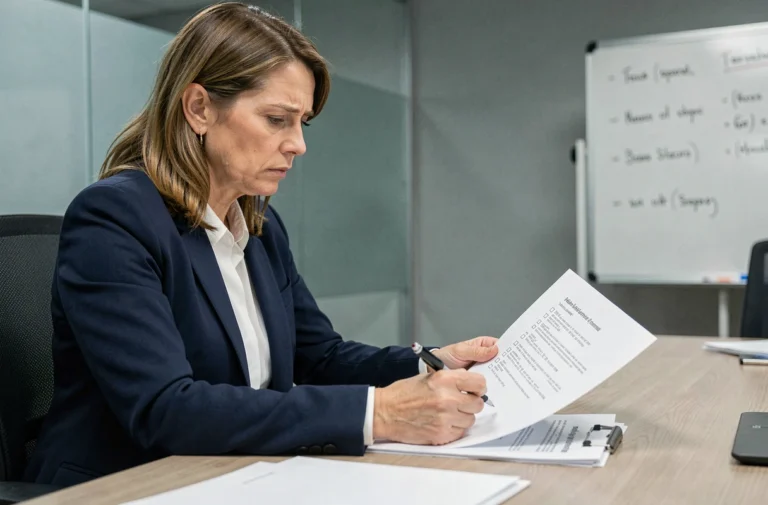
A point rarely highlighted in traditional presentations of federations: their direct intervention in regulatory compliance regarding risk prevention. The FFB indicates that in the case of an incomplete or absent DUER, the Dreets can now issue a warning or impose an administrative fine.
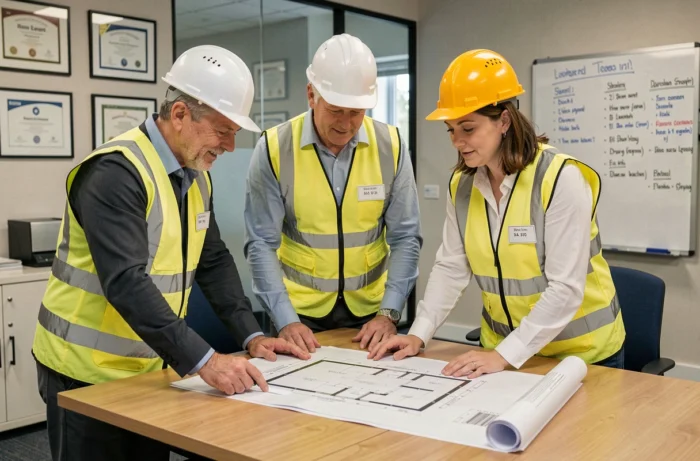
For a small construction company, drafting or updating this document without support is like navigating an obstacle course. Departmental federations organize DUER workshops with the OPPBTP or the occupational health and safety service. This type of on-the-ground support transforms an administrative obligation into a structured approach.
The stakes go beyond avoiding a fine. A well-constructed DUER serves as a basis for identifying risks of falls, chemical exposure, or musculoskeletal disorders, three major causes of work stoppages in construction. Participating in these workshops through one’s federation also provides access to feedback from local companies facing the same site-related issues.
Beyond the DUER, the FFB promotes the TOP BTP program from the Health Insurance – Occupational Risks. This program finances, under certain conditions, equipment, training, and support services for construction companies with 1 to 49 employees exposed to falls or chemical risks. Without federal support, many leaders are unaware of the existence of this funding.
Training and skills development: beyond the classic catalog
Professional training is a recurring argument to justify membership in a federation. However, field feedback shows that the real added value depends on how this training is deployed locally.
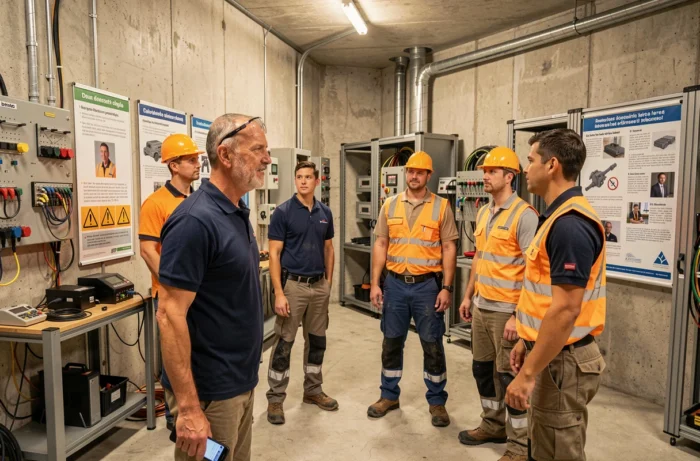
In Burgundy-Franche-Comté, the FFB network mobilizes specialized business contacts on technical, digital, energy, and environmental topics. These regional collective information sessions are not like generic training: they address concrete issues related to ongoing transformations (gas regulation, health protection of water networks, environmental memory of construction sites).
The CAPEB, for its part, targets artisans with modules tailored to very small structures. It has notably launched a program aimed at electricians to enhance their skills in response to the rise of charging stations and photovoltaic installations. This type of pathway illustrates how a federation adapts its training offerings to market developments, rather than providing a fixed catalog.
CQPs (certificates of professional qualification) represent another lever. A team leader or a worker who obtains a CQP through their federation sees their skills recognized by the industry, which facilitates human resource management and responses to tenders requiring specific qualifications. Several companies use the training from the French Building Federation as the foundation of their annual skills development plan.
Technical and regulatory support in the face of changes in construction
The end of gas in new construction and hybrid solutions to oil in renovation starting in 2027 illustrates the pace of changes that companies must adapt to. For a heating artisan or installer, this deadline profoundly alters their commercial offering and technical training needs.
Federations play an active monitoring role here. The FFB publishes application guides on regulations (health protection of water networks, gas installations in ERP) and organizes thematic workshops such as the one dedicated to the environmental memory of construction sites. These resources allow members to anticipate rather than suffer from new standards.
Federal support also covers the economic and fiscal dimension. The reduced VAT rate on energy improvement work, for example, remains a scheme whose application conditions evolve regularly. Departmental federations disseminate updated practical sheets and answer specific questions from their members regarding the eligibility of certain types of work.
- Targeted regulatory monitoring by profession (heating, ventilation, carpentry, structural work) with alerts on normative developments
- Practical application guides distributed to members before the new rules come into effect
- Regional workshops led by technical specialists, not just classroom training
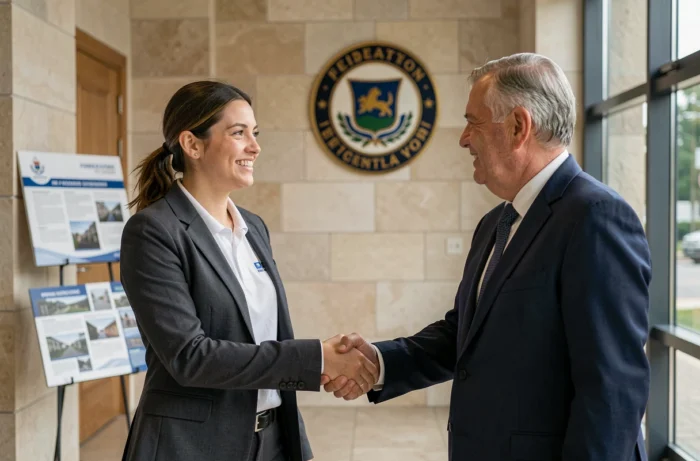
Network and union representation: what membership changes for a construction company
The network dimension of a federation is not limited to a directory of contacts. For a company responding to public contracts, membership in the FFB or CAPEB facilitates access to information on ongoing consultations and certification requirements such as Qualibat.
Representation before public authorities remains the core business of federations. The FFB claims several advances achieved in 2026, particularly regarding the expanded large hauler bonus in response to the fuel price crisis. This type of collective action benefits all members, including those who cannot afford to conduct lobbying efforts on their own.
Field feedback varies on one point: the quality of support varies among departmental federations. Some have well-staffed teams with specialized advisors by trade, while others operate with more limited resources. Before joining, it remains relevant to inquire about the services actually available in one’s department.
Membership in a construction federation incurs an annual budget that is not negligible for a small business. The question to resolve is not whether the benefits exist, but whether the company is truly leveraging them: prevention workshops, funding schemes, technical monitoring, legal support. A passive membership does not generate a return on investment. It is the active use of the services offered that makes the difference between a useful contribution and an additional expense.