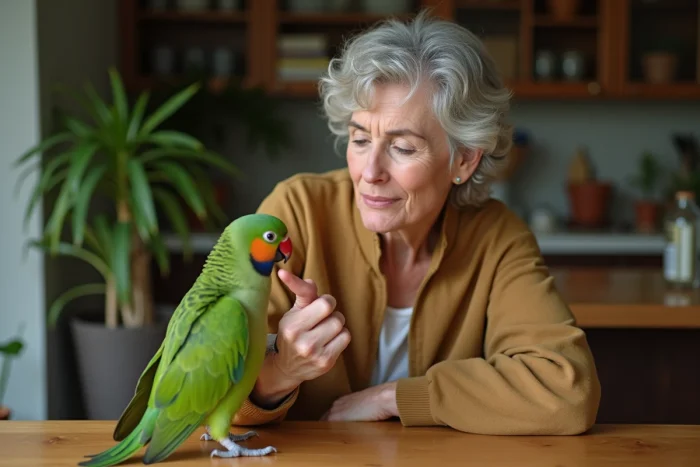
Some birds defy categories without ever trying to fit into a box. The kakariki, with its parakeet-like appearance and parrot-like behaviors, imposes its own logic. For it, intelligence is not judged by vocal prowess, nor by the size of the beak, but by the way it inhabits space and interprets the slightest sound from the outside.
The parrot family is often attributed with a disconcerting ease in repeating human words. However, reality nuances the picture: not all kakarikis engage in imitation, even when learning is a daily occurrence. Their intelligence expresses itself differently, through keen observation, subtle interactions, and sometimes bewildering reflexes for those who are eagerly awaiting speech. The boundary between parakeet and parrot is not drawn by plumage, sound volume, or even by what we expect from them from a human perspective.
Some kakarikis are lively, overflowing with energy, yet maintain a remarkable vocal restraint. Others, less exuberant, demonstrate a keen understanding of human signals. These contrasts are not anecdotal: they weigh heavily in the choice of a pet bird and on how it will thrive alongside us.
Parrot or parakeet: how to distinguish these fascinating birds?
Behind the words “parrot” and “parakeet” lie realities that are much more nuanced than everyday language suggests. Bird enthusiasts know this: distinctions are made in the details. The colorful, vibrant plumage in both groups first catches the eye, but offers no certainty. It is size that often makes the distinction: parrots display a more imposing build, but some parakeets, like the pennant, easily rival the smallest parrots.
The hooked beak is a common point… but it exists in an XXL version in the macaw or in fine form in the kakariki. The latter, very adept at cracking seeds and fruits, shows a subtle dietary adaptation. Behavior varies just as much: the catherine parakeet stands out for its almost effervescent sociability, while the Gabon parrot embodies a reserved intelligence.
Breeders in France offer a wide range of species: kakariki parakeet, Gouldian finch, cockatoo… Each bird imposes its personality and needs. Before choosing, one must consider the animal’s origin, the quality of its diet, and its ability to form a bond with humans.
To learn more about the kakariki bird, its vocal abilities, and the always debated question of true speech versus mere imitation, there is a resource: Can kakarikis really talk like parrots? The debates remain lively, fueled by field experience and the patient observation of these strong-willed birds.
Intelligence and communication: what the kakariki reveals about parrot capabilities
The kakariki never seeks to shine through spectacle. Its intellectual liveliness is experienced in everyday gestures: a way of looking, exploring, reacting to the unexpected. Careful observation reveals a bird capable of learning, imitating, and interacting in nuanced ways. In an attentive aviary, it surprises with its ability to solve small challenges, integrate new routines, and notice changes in its immediate environment.
On the vocal side, the kakariki does not match the Senegal parrot, whose imitations of the human voice astonish with their fidelity. But one should not underestimate the richness of its repertoire. This bird reproduces sounds, whistles, and sometimes a few words, indicating its auditory memory and mental flexibility. Specialists note that the kakariki excels especially in daily exchanges: it picks up familiar sounds and reinterprets them in its own way, demonstrating active listening and dynamic mimicry.
Here are some concrete forms this imitation talent takes:
- Imitating sounds: the kakariki modulates its song, sometimes even incorporating typical household sounds.
- Reproducing sequences: clicks, bursts of laughter, electronic sounds, its curiosity knows no bounds.
Its sociability completes this picture: it seeks attention, reacts to presence, and adapts its vocalizations to the atmosphere of the home. The kakariki, far from being just a decorative bird, genuinely seeks to engage in dialogue with its surroundings. It weaves that tenuous yet strong bond that characterizes companion parrots.
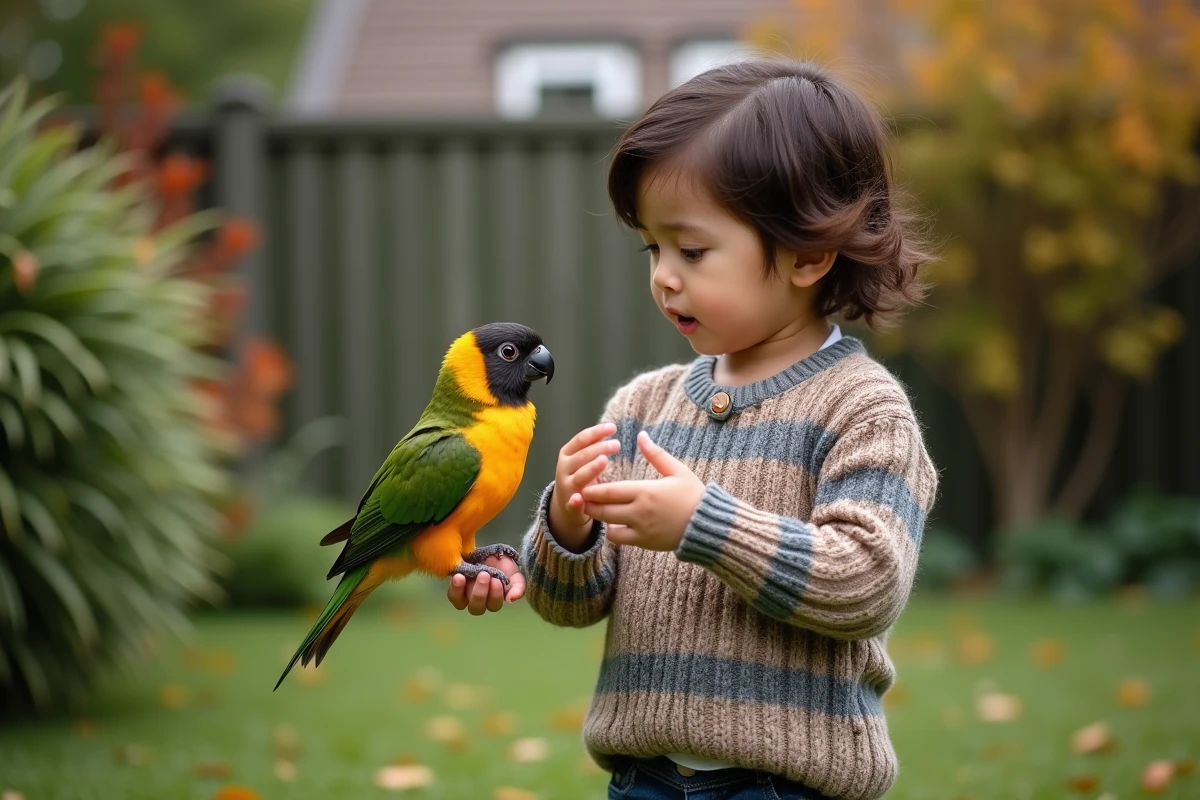
Adopting a feathered companion: practical tips for choosing and caring for your bird
The kakariki charms with its energy and curiosity, but living with it requires anticipation and commitment. Before opening the door to this companion, one must precisely assess its needs. The choice is never limited to the color of the plumage or the shape of the beak. Ideally, one should turn to a breeder who ensures the health and well-being of each bird. A healthy kakariki sports a clean plumage, bright eyes, and an alert posture.
The living space must cater to its dynamism. A spacious cage, varied perches, and a few natural branches are enough to stimulate its intelligence and prevent boredom. Diet plays a crucial role in its vitality and longevity. A daily menu should include a balanced mix of seeds and fresh fruits like apple, pear, carrot, or spinach leaves. It’s best to limit the amount of fatty seeds, particularly sunflower seeds, and ensure that fresh water is always available.
Life rhythm and interaction
To ensure your bird’s balance, certain habits should be established:
- Maintain a regular presence to strengthen the companionship bond.
- Offer supervised moments of freedom for healthy and safe exercise.
- Increase stimulation: toys, bells, mirrors, to nurture its curiosity and intelligence.
A kakariki can live for about ten years, sometimes longer. This bond is long-lasting: it requires consistency, attention, and real availability. Welcoming a kakariki means accepting the promise of an authentic relationship, at the crossroads of the wild and the familiar, and sometimes being surprised by the unexpected in the midst of a silent exchange or an unexpected vocalization.