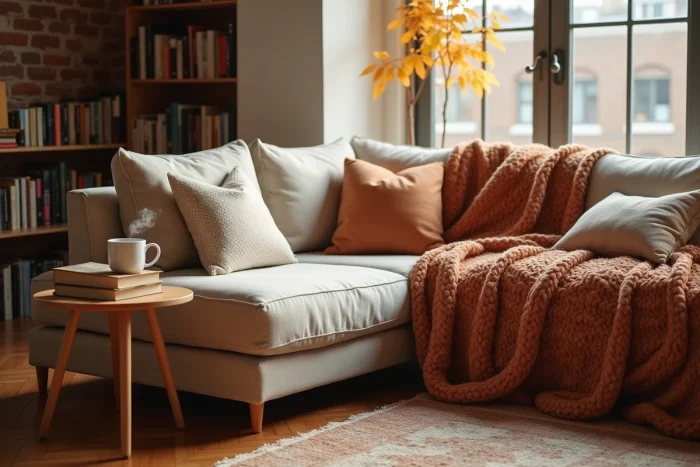
Creating an interior that functions like a warm cocoon is not just about piling blankets on a sofa. The transformation relies on precise technical choices, from the acoustic treatment of walls to the management of color temperature in lighting, as well as the selection of materials whose sensory impact goes beyond mere appearance.
Acoustic Comfort: The Underestimated Lever of a Cocooning Interior
A space perceived as enveloping is primarily a quiet space. Since the rise of remote work, French interior designers have noted a marked increase in requests for “quiet rooms,” according to the “Living and Teleworking” survey published in November 2024 by the National Council of the Order of Architects.
We recommend addressing acoustics before thinking about visible decoration. Three categories of interventions yield tangible results:
- Textile wall panels made of wool felt or recycled polyester, installed on the walls most exposed to neighborhood noise, which absorb the mid-range frequencies responsible for auditory fatigue.
- Heavy lined curtains, ideally with a sufficiently dense weight to dampen both external noise and internal reverberations, while providing an enveloping visual texture.
- Thick, long-pile rugs or looped wool rugs, placed on hard floors (parquet, tiles), which reduce sound propagation from impact and immediately soften the ambiance of a living room or bedroom.
Acoustics condition the perception of warmth in a space. A well-furnished but reverberant living room remains cold, regardless of the chosen color palette. Exploring the entire home universe of Vivez Décorez allows you to find textiles and accessories that combine decorative function and sound absorption.
Connected Lighting and Color Temperature: Controlling the Ambiance of a Living Room
Lighting is the parameter that most radically alters the perception of an interior, more so than wall color. “Human-centric” systems, capable of automatically varying color temperature and intensity according to the time of day, transform the same space into a stimulating workspace in the morning and a relaxing cocoon in the evening.
Studies in residential settings, particularly those conducted by Signify (Philips Hue), show an improvement in the sensation of comfort and relaxation in the evening with these devices. The principle is based on respecting the circadian rhythm: cool light in the morning, warm light from late afternoon onwards.
What We Recommend for Effective Cocooning Lighting
Multiply light sources rather than relying on a single ceiling fixture. Three to five light points distributed at different heights (bedside lamp, wall reading light, low garland, indirect floor lamp) create a network that eliminates harsh shadow areas.
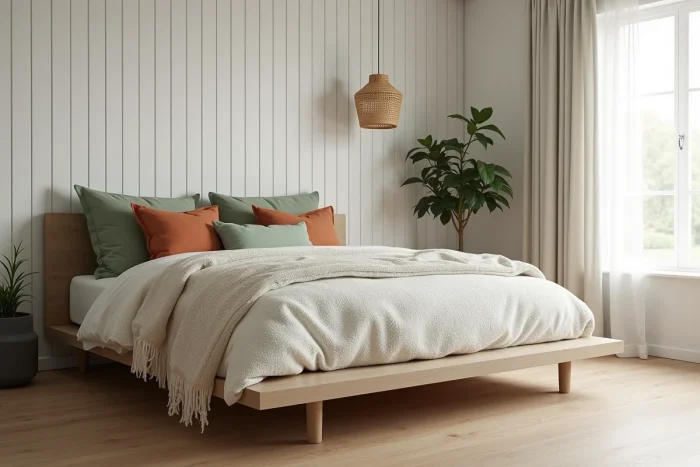
For the bedroom, prefer fixtures with a temperature below 2,700 kelvins in night mode. This value produces an orange spectrum close to candlelight, without the blue component that disrupts falling asleep.
A dimmer on each circuit remains the most cost-effective gesture to transform the ambiance of a room without changing furniture.
Eco-Friendly Materials for Sustainable Cocooning Decoration
The choice of “cocooning” materials has shifted. Synthetic furs and acrylic throws that dominated pre-COVID cozy atmospheres are giving way to recycled wools, certified wood, and low-VOC paints. This evolution meets both the expectations of occupants and the gradual implementation of European regulation (EU) 2023/1542 on construction products.
Specifically, washed linen, brushed organic cotton, and virgin or recycled wool offer a touch comparable to high-end synthetics, with better hygrometric regulation. A recycled wool throw absorbs and releases ambient moisture, stabilizing the sensation of warmth on the skin. A polyester throw traps sweat.
Wood and Natural Fibers: Structuring the Space Without Weighing It Down
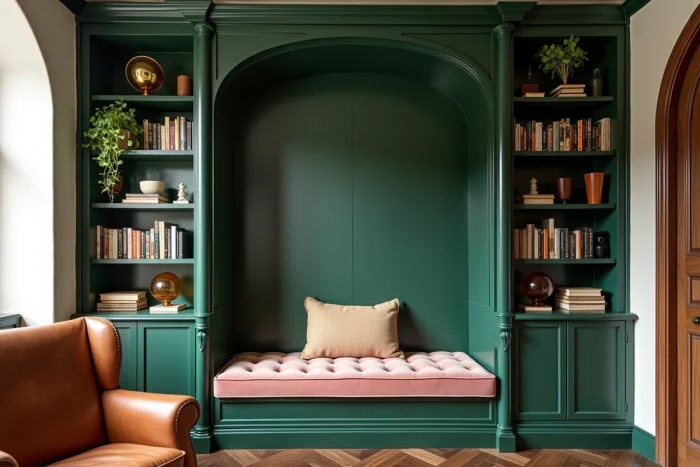
Wood remains the reference material for bringing visual warmth. We observe that light woods (bleached oak, ash, birch) work better in small spaces than dark woods like walnut, which absorb light and reduce the perception of volume.
For a bedside table, wall shelf, or bed frame, certified solid wood (PEFC or FSC) guarantees both durability and consistency with a cocooning approach that does not sacrifice the environment for immediate comfort.
Woven fibers (rattan, sea rush, raffia) provide a texture that wood alone does not offer. A sea rush basket placed near a sofa or a woven rattan lampshade on a bedside lamp introduces a visual irregularity that breaks the rigidity of a decor that is too “catalog.”
Colors and Wallpaper: The Palette That Transforms a Living Room into a Refuge
Terracotta, sage green, and muted blue shades dominate current cocooning palettes, and for a technical reason: these moderately saturated colors absorb light without creating an aggressive contrast with light wood furniture.
An accent wall in textured wallpaper is enough to anchor the identity of a room. Non-woven wallpaper with relief (stucco effect, raised plant pattern) adds a tactile dimension that paint alone cannot offer. Placed on the wall behind the bed or behind the living room sofa, it creates a focal point without overloading the decor.
We recommend limiting the palette to three main shades per room: a neutral dominant (walls and floor), an intermediate shade (textiles, curtains), and an accent color (cushions, objects, wallpaper). This constraint enforces coherence and avoids the cluttered effect that destroys any sense of cocoon.
A warm interior is built in successive layers, starting with the invisible (acoustics, lighting quality, material choices) before moving to the visible (colors, style, decorative objects). Addressing physical comfort before visual pleasure yields more lasting results and a space where one truly feels enveloped, not just decorated.