The flourishing of a child is not just a checklist of good practices to tick off. It depends on a set of emotional, social, and material conditions that vary according to age, family configuration, and the temperament of each child. Rather than compiling generic advice, this article explores three concrete, sometimes overlooked, areas that influence daily development.
The role of grandparents in a child’s emotional development
Articles on flourishing focus almost exclusively on the parent-child relationship. The role of grandparents as a secure third party in the child’s emotional life is rarely addressed, even though it significantly alters the family dynamic.
A grandparent provides the child with an attachment bond distinct from that of the parents. This bond does not carry the burden of daily educational responsibilities (homework, schedules, discipline), allowing the child to experience a more relaxed relationship. For parents, the regular presence of an involved grandparent reduces pressure and promotes their own balance, which reflects positively on the family climate.
Specialized psychologists emphasize that for this role to work, certain conditions must be met. Grandparents who truly support their grandchildren’s flourishing are those who respect the parents’ educational choices without contradicting them in front of the child. Consistency among referring adults remains a factor of emotional security for the child.
When you seek to learn everything about Le Petit Blog de Maman, you access resources that detail these family interactions and their impact on daily life with a child.
Only child and social flourishing: different needs
The majority of parenting guides treat the child as a generic subject, without distinguishing family configurations. An only child does not have the same socialization needs as a child growing up with siblings.
Increasing opportunities for cooperation
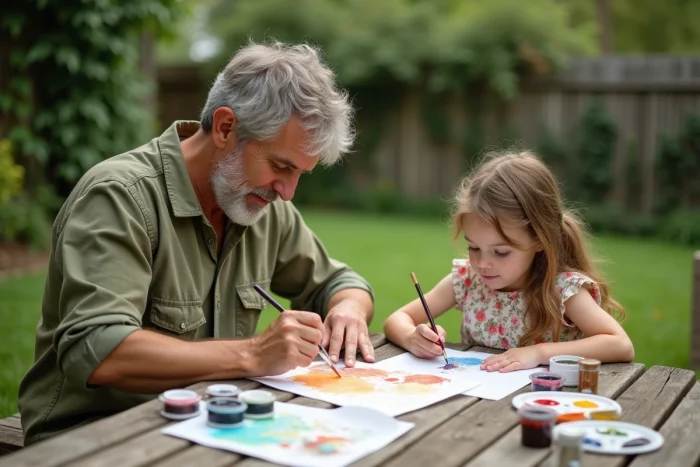
For a child without siblings, the home does not naturally provide the situations of conflict, negotiation, and sharing that siblings impose daily. Psychologists recommend increasing socialization opportunities outside the home: regularly inviting friends, organizing group activities, fostering connections with cousins or neighbors of the same age.
The goal is not to “compensate” for the absence of siblings but to provide the child with contexts where they develop cooperation, empathy, and the ability to coexist with peers. These social skills are not acquired through theory. They are built through repeated interaction.
Avoid role reversal
A common pitfall with an only child is to make them a confidant or “best friend.” This excessive closeness can hinder their emotional autonomy. The child needs to feel that their parents remain referring adults, not equals. Maintaining a clear distinction between complicity and confidence protects the child from an emotional burden that does not belong to them.
Screens and socialization: a less binary approach
The dominant discourse on screens and children often boils down to “limiting screen time.” This recommendation remains relevant, but it masks a more complex reality.
For some children, particularly only children, supervised screen use can facilitate social integration. When a program, game, or series becomes a shared topic of conversation at school, a child who has never had access to it may find themselves out of sync with their peers. Experts who nuance the anti-screen discourse do not advocate for unrestricted access. They recommend support on two specific axes:
- Screen time, appropriate to the child’s age, with defined and respected limits daily
- Content selection, prioritizing those that can be discussed with family or friends
- The presence of an adult during viewing for younger children, to transform a passive moment into an active exchange
The issue is not to eliminate screens from the child’s environment but to integrate them as one tool among others, without replacing free play, reading, or physical activities.
Free play and learning: why unstructured play matters
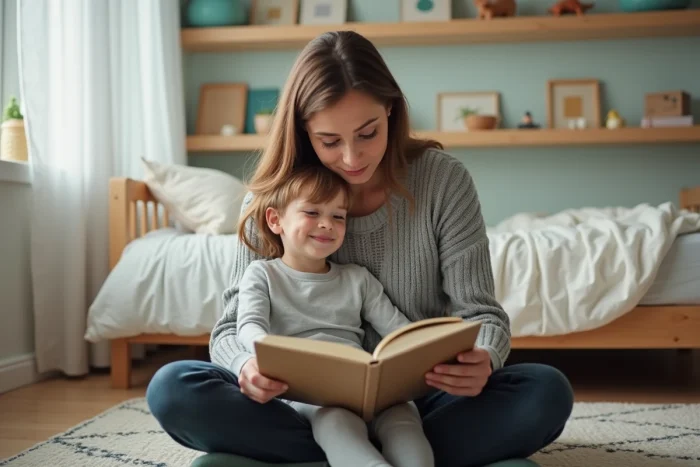
Parents often invest in structured activities (sports, music, creative workshops) to foster their child’s development. These activities have their place, but they do not replace unstructured free play without adult goals or instructions.
When a child plays alone or with other children without imposed structure, they make decisions, invent rules, manage frustrations, and negotiate. This type of play develops skills that structured activities do not engage in the same way.
- Free play encourages initiative and self-confidence, as the child chooses what to do and how to do it
- It stimulates creativity without the pressure of results, unlike workshops where a model is often expected
- It allows the child to experience boredom, which triggers the search for solutions and imagination
The environment plays a direct role here. A space with a few simple objects (cardboard, fabrics, natural elements) often produces more play than sophisticated toys with a single function. Reducing the number of available toys paradoxically stimulates the child’s creativity, as they must invent uses rather than follow a manual.
Supporting a child’s flourishing daily involves less accumulating methods and more paying attention to their family configuration, their real social interactions, and the quality of the play spaces offered to them. Field feedback varies on many educational topics, but on one point, observations converge: a child who feels emotionally secure and has unstructured time explores, learns, and grows.